
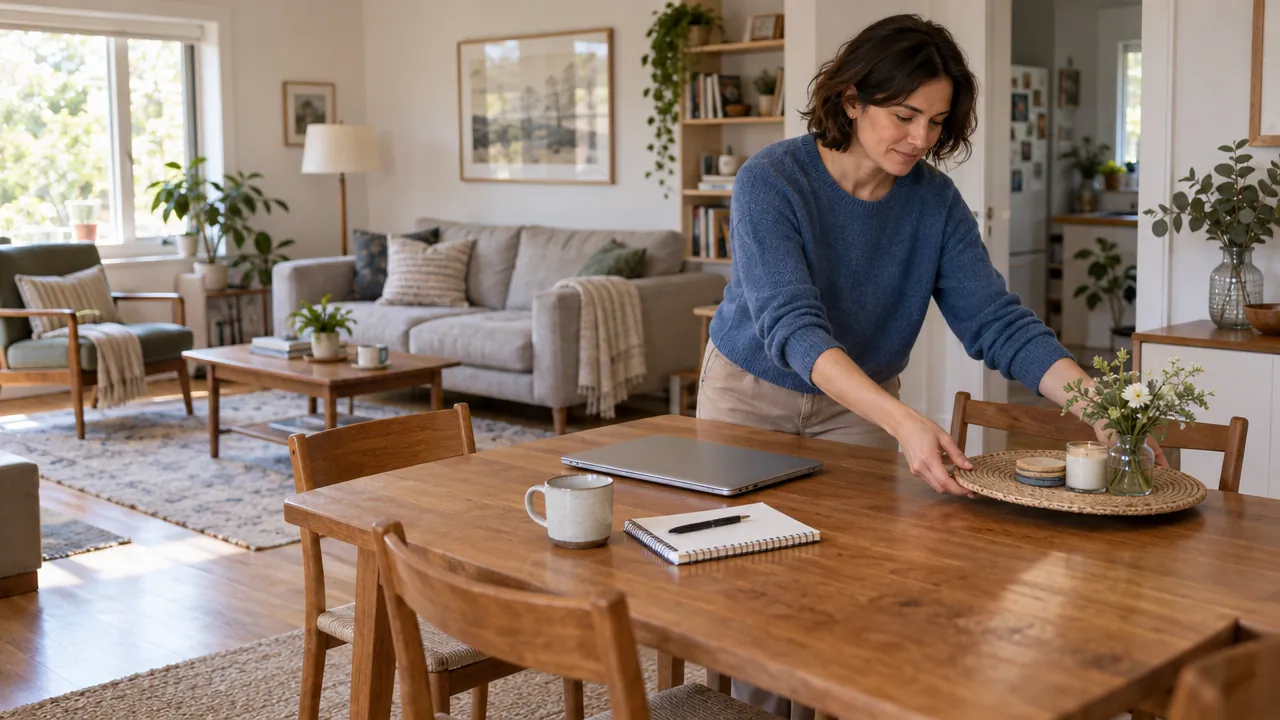
You have put things away, straightened the cushions and given the main rooms a quick clean. Yet when you sit down after a Sunday reset, something still feels slightly off. The room looks presentable, but living in it through the week takes more effort than it should. Tidying may not resolve that feeling if the arrangement of the space no longer matches what happens there.
One way to examine the mismatch is to ask whose routines your home reflects. It might be arranged for the person you hope to become, for habits you have left behind, or for someone else’s idea of how a home ought to work. None of these arrangements is necessarily wrong. They are worth reconsidering when the people living there now have to work around them every day.
A clean room tells you that things have been put away, not whether they are in useful places or whether the room serves its current purpose. Notice which areas you use, which you leave untouched and where you must move things before an ordinary task can begin. Those points of friction offer a starting place without assuming the whole room needs changing.
A home arranged for future plans
An aspirational space is arranged around things you intend to do. There is nothing wrong with making room for a new interest or imagining a different routine. The difficulty comes when a planned activity takes up space that current activities need, especially if you have fully equipped an area before finding out whether you will use it. A room can be ready for a hoped-for habit while being inconvenient for the habits you already have.
That difference can show up in several ways:
- A craft area holds equipment for skills you intend to learn, while regularly used things have nowhere convenient to go.
- A dedicated home office has a desk and a filing system, but you usually choose to work at the kitchen table.
- The kitchen contains a full set of cookware, tools and gadgets for meals you plan to make, rather than the meals you currently prepare.
- A meditation corner is ready for quiet mornings that have not become part of your routine.
- A reading nook is set up for cosy Sundays and early evenings, but you normally spend that time on the sofa watching television or scrolling on your phone.
These examples are not arguments against hobbies, home offices or comfortable places to read. They show the difference between allowing for an idea and arranging the home as though the idea were already part of daily life. An unused reading nook might occupy a useful corner; it might also remind you of a plan you have not taken up. Either way, it is worth comparing the space devoted to that plan with the space needed for what you do now.
Try the routine before committing the space
Plans can change, even when they seem certain. Start small, change habits gradually and see whether a new activity finds a place in your life before giving it a permanent area or a large share of storage. A developing reading habit, for example, might eventually make the nook useful. Until then, the room still needs to serve the evenings you actually have. Testing the routine first leaves room for the possibility without treating present-day use as a temporary inconvenience.
You can adjust the arrangement bit by bit as your habits change. What works now does not have to be the final version of a room, and a space prepared for a goal does not have to remain untouched simply because the goal matters to you. If you begin using the reading nook regularly, its place in the room may make more sense. If you do not, you can reconsider how much space it occupies without having to decide what your future interests will be.
A home arranged for an earlier life
Sometimes an arrangement made sense when you moved in, after a thorough sort-out, or during a particular stage of family life. It may have evolved over several such periods rather than being planned all at once. Then routines changed, while decisions about where things belong stayed largely in place. Because there may have been no single moment when the set-up stopped working, the mismatch can be harder to spot than an obvious pile of clutter.
Changes in how a household uses its rooms can make old decisions less useful:
- Children who once needed a playroom are now teenagers who would make more use of a family room when friends visit.
- A weekday commute that used to take you out from seven until seven has changed to working from home three days a week, but there is no place that works well for those days.
- You no longer go to the gym and now exercise in the living room, moving the furniture each time to make space.
In each case, the existing arrangement reflects a real need, just not necessarily a current one. The playroom was useful when the children were younger; the lack of a work area may not have mattered during a daily commute. Keeping those decisions by default can leave people adapting to the room rather than adapting the room to their routines. A familiar home may still feel comfortable in many ways while making a few repeated activities awkward.
The feeling can be a little like occupying a home inherited from an earlier version of yourself: much of it is recognisable, but some choices belong to a different time. The mismatch need not be dramatic. Having to clear a place to work three times a week, or move furniture whenever you exercise, is easy to accept as normal when it has developed gradually. Repeated small inconveniences are still worth noticing.
A busy period can delay these adjustments. Illness, a family emergency, difficult times at work or a new baby may leave little opportunity to rethink how rooms are used. That does not mean the original arrangement was a mistake, or that every household change calls for an immediate reorganisation. Needs can simply keep moving while reviewing the space falls down the list of priorities.
Look for effort that has crept in
Rather than beginning with a complete redesign, consider the tasks that have become more awkward. Are you clearing a surface before every work-from-home day? Does the living room need rearranging each time you exercise? Is a room still chiefly reserved for a use that happens much less often now? These questions connect the arrangement to what people do, rather than to how the space was intended to work years ago.
The answer might involve one small adjustment or a broader change in how a room is used. You do not need to assume that every old arrangement should go. Keep what continues to serve the household and reconsider what repeatedly gets in the way. A home set up for life three years ago may still meet some needs well; the places where routines have shifted are the ones that merit another look.
A home arranged around what it ‘should’ be
Another mismatch can come from following an idea of how a home is supposed to look. That idea might come from another household’s system, your family’s habits, Pinterest boards or interiors magazines. Examples can be useful, but a layout that suits someone else may add steps to your own day. A room can look orderly while its designated purpose bears little relation to how you live.
Common assumptions about where things belong and what rooms are for include:
- Post belongs in a formal filing system, even if that system makes it harder for you to deal with it.
- Cleaning supplies belong under the sink because that is where you expect them to live.
- A dining room should be used for meals and entertaining every day, regardless of how often that happens.
- Rooms should follow a particular style or layout, even when that limits a more useful arrangement.
- A spare room should remain a guest room, rather than serve as a dressing room, home office or general overflow space.
None of these conventions is inherently a problem. A filing system can be helpful, and a guest room may be well used. The point is to compare the expected use with the actual one. If a system for dealing with post creates more friction rather than less, its neat appearance is not the whole story. The question is whether you can use it as part of your ordinary routine.
The same applies to the dining area. If you enjoy eating at the kitchen island and the dining table works better as a workspace, insisting on using that table for every meal may make both activities less convenient. If guests stay six times a year but a dressing room would be used daily, the balance of uses is worth considering. Neither example dictates what the room must become; each asks whether its assigned purpose reflects how often it is needed.
Question the rule, not the room
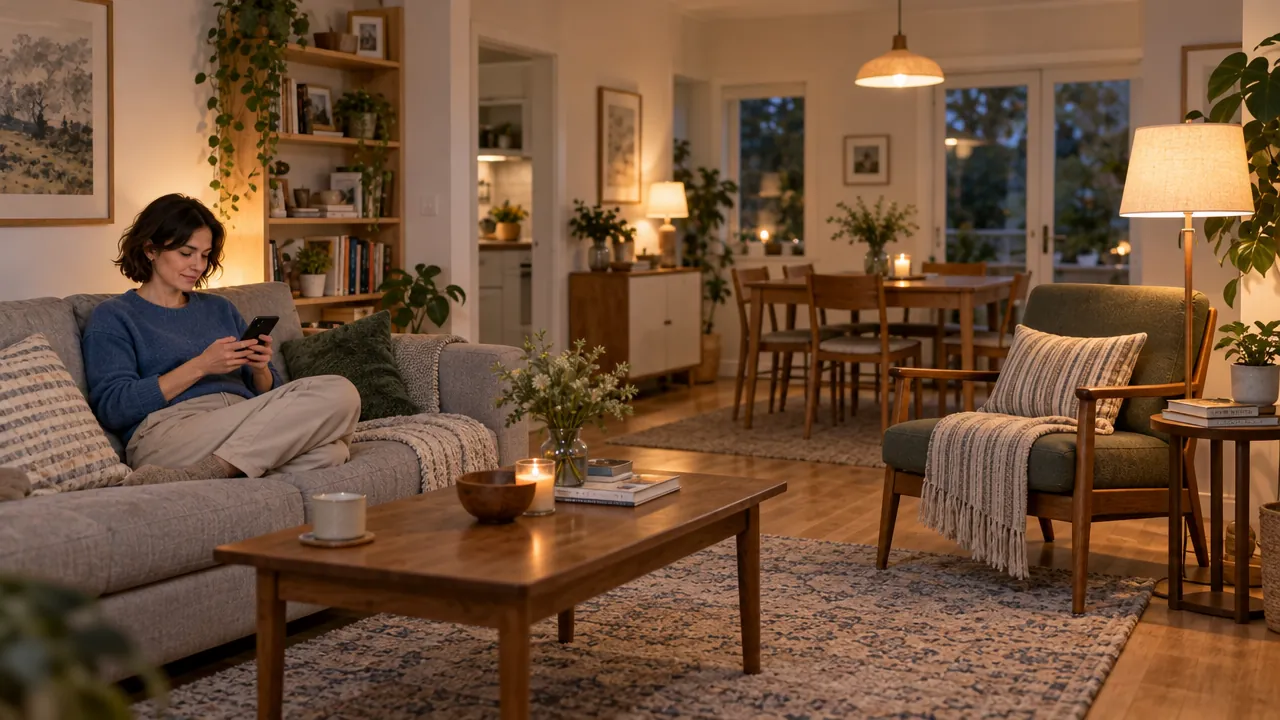
When a space feels difficult to use, ask whether you are preserving an arrangement because it helps, or because you think the room is meant to work that way. The answer may differ between households and may change over time. You need not replace every familiar system. First identify the particular expectation causing friction, then consider an adjustment that better reflects the activities taking place.
It can help to separate appearance from function. Clear surfaces and straightened cushions show that a room has been tidied; they do not tell you whether post is easy to handle or whether the dining table is available when you need to work. A room set up to look a certain way may seem successful when everything has been put away, yet become awkward once ordinary activities begin again.
Make changes for the people living there now
The three patterns can overlap. A spare room might hold equipment for a future hobby while still being kept as a guest room out of habit or expectation. There is no need to assign it a single label before changing anything. Instead, ask who uses the space now, what they use it for and which part of the arrangement makes that use harder. Looking at a typical week may reveal more than looking at the room immediately after a tidy-up.
Choose one change to try, even if it is small, and notice whether it makes a regular task simpler. If the change does not help, or your habits shift again, you can reconsider it. The aim is not to create a permanently finished home or abandon every plan for the future. It is to give current needs a place alongside those plans, rather than continually making do around spaces reserved for another time or purpose.
After a weekly reset, the surfaces may look much as they did before. What matters is whether the rooms also work when the week starts: when someone needs to sit down to work, make a meal, deal with post or spend an evening at home. Gradual adjustments based on those moments can make a tidy space more useful to the people living in it now.